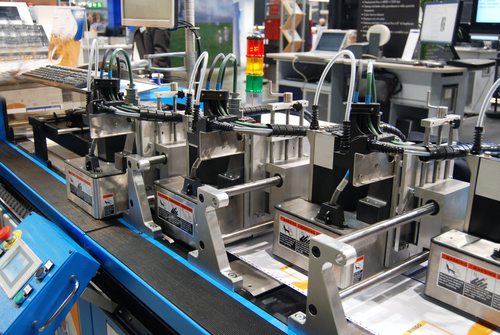
Direct mail fulfilment is the process of turning printed material and recipient data into correctly prepared, addressed and dispatched mail.
Depending on the campaign, that can include data processing, personalisation, printing, folding, inserting, enclosing, addressing, postal preparation and final handover into the postal network.
The most effective production route depends on the mailing itself.
A personalised letter and envelope campaign has very different requirements from a catalogue mailing, promotional pack, membership communication or multi-piece campaign containing several inserts.
Cliffe Enterprise provides independent print management and direct mail fulfilment, selecting appropriate production and mailing partners according to the specification rather than requiring every campaign to fit one fixed manufacturing facility.
What Does Direct Mail Fulfilment Include?
Direct mail fulfilment can include:
- data preparation and processing;
- variable-data personalisation;
- printing;
- folding;
- collation;
- inserting and enclosing;
- addressing;
- wrapping where appropriate;
- postal sortation and preparation;
- carrier selection;
- dispatch; and
- returns management where required.
Not every mailing requires every process.
The first step should be to understand the complete campaign before deciding how it should be produced and fulfilled.
What Types of Direct Mail Can Be Fulfilled?
Direct mail can take many forms, including:
- personalised letters;
- postcards;
- self-mailers;
- brochures;
- catalogues;
- leaflets;
- membership communications;
- promotional packs;
- renewal communications;
- multi-piece envelope packs; and
- other printed customer communications.
The format affects printing, personalisation, enclosing, postage and the equipment required to manufacture the mailing efficiently.
Why Should Print and Fulfilment Be Planned Together?
Print and fulfilment are often treated as separate purchasing decisions.
That can be expensive.
The size, weight, paper, number of components, folding method and finished format can all affect the way a mailing is enclosed and posted.
A small specification change made before printing can sometimes reduce:
- production complexity;
- manual handling;
- pack weight;
- postage;
- material use; or
- fulfilment cost.
Cliffe therefore considers the printed product and mailing route together wherever possible.
Direct Mail Data
Accurate data is fundamental to a successful mailing.
Poor data can result in duplicate packs, undeliverable mail, unnecessary print, wasted postage and a poor recipient experience.
Depending on the campaign and supplier, data-processing requirements can include:
- duplicate identification;
- address validation;
- suppression;
- sorting;
- segmentation;
- formatting; and
- preparation for personalisation and postal processing.
The exact requirements depend on the data supplied and the mailing service being used.
Data requirements should therefore be established before production rather than handed to the fulfilment provider as an afterthought.
Personalised Direct Mail
Direct mail can be personalised far beyond simply printing a recipient’s name and address.
Variable-data production can potentially change:
- names;
- addresses;
- text;
- offers;
- images;
- response codes;
- QR codes;
- personalised URLs; and
- other campaign elements.
The appropriate level of personalisation depends on the campaign objective, available data and production method.
More personalisation is not automatically better.
It should be used where it adds meaningful relevance to the communication.
Printing for Direct Mail
The most appropriate printing process depends on the quantity, format, artwork and degree of personalisation required.
Digital production can be particularly useful where every item contains variable information or where multiple versions and shorter quantities are required.
For larger quantities or less variable work, other printing processes may provide better manufacturing economics.
There is no single best printing process for every direct mail campaign.
The production method should follow the specification.
Folding, Collation and Inserting
A direct mail pack may contain one item or several components.
These can potentially include:
- letters;
- leaflets;
- brochures;
- reply forms;
- cards;
- vouchers; and
- other inserts.
Where the specification permits, automated equipment can fold, collate and insert these components efficiently.
Unusual sizes, materials or pack configurations may require specialist equipment or manual fulfilment.
This is another reason to establish the intended fulfilment method before the printed components are finalised.
Envelope Enclosing
Envelope mailing remains appropriate for many direct mail applications.
The envelope itself forms part of the production specification.
Considerations can include:
- envelope size;
- window position;
- number of inserts;
- pack thickness;
- addressing method;
- sealing;
- postal format; and
- machinability.
Choosing an envelope before the contents have been fully specified can create unnecessary restrictions later.
The pack should be engineered as a complete item.
Wrapping and Alternative Mailing Formats
Some printed products can be mailed using wrapping or other enclosing formats where appropriate.
The best option depends on the product, postal requirements, protection needed, presentation and environmental objectives.
Clear plastic wrapping should not automatically be treated as the default solution.
Paper-based wrapping, envelopes and other formats may be more appropriate depending on the mailing.
Cliffe can assess the available options as part of the complete fulfilment specification.
Postage Is Part of the Specification
Postage can represent a substantial proportion of the total cost of a direct mail campaign.
It should therefore be considered before the printed item is manufactured.
Factors that can affect postal cost include:
- dimensions;
- thickness;
- weight;
- quantity;
- data quality;
- addressing;
- sortation;
- format;
- service level; and
- carrier.
Seemingly minor changes to paper weight, finished size or pack construction can potentially affect the postal category or available mailing service.
The correct comparison is therefore the complete delivered cost, not simply the cheapest print price.
Postal Optimisation
Different mailing services and carriers can suit different campaign requirements.
The appropriate route depends on factors including:
- quantity;
- format;
- weight;
- delivery objective;
- destination;
- data;
- schedule; and
- available postal products.
A production decision that saves a small amount on print but increases postage across thousands of items can be a false economy.
Cliffe can consider print, fulfilment and postage together when comparing production routes.
Direct Mail for Brochures and Catalogues
Brochures and catalogues frequently form part of direct mail campaigns.
For these products, pagination, paper weight and finished size can materially affect both manufacturing and postage.
The correct specification therefore depends not only on how the brochure or catalogue should look, but also on how it will reach the recipient.
Where a substantial quantity is being mailed, postage implications should be assessed before paper and format are finalised.
Direct Mail and Print Fulfilment
Direct mail fulfilment and general print fulfilment overlap, but they are not identical.
Direct mail fulfilment usually concerns preparing individual addressed items or packs for distribution through a postal network.
Print fulfilment can also involve:
- stock holding;
- pick and pack;
- replenishment;
- bulk distribution;
- multi-address deliveries; and
- ongoing order fulfilment.
Some projects require both.
Cliffe can coordinate print production, stock and distribution according to the requirement.
Data Security
Direct mail can involve personal data.
The security requirements should therefore be established when the production route is selected.
Depending on the project, considerations can include:
- secure data transfer;
- controlled access;
- data-processing procedures;
- supplier accreditations;
- retention and deletion requirements; and
- appropriate contractual arrangements.
The level of control required depends on the nature of the data and the client’s own governance requirements.
Where sensitive or regulated data is involved, this should be identified at the beginning of the project.
Reducing Waste in Direct Mail
Waste can occur through:
- inaccurate data;
- duplicate records;
- overprinting;
- inappropriate pack design;
- unnecessary material;
- undeliverable addresses; and
- obsolete printed stock.
A well-planned campaign can reduce waste before production begins.
For repeat campaigns, actual usage and returns can also inform future quantities and data management.
The objective should be to manufacture and mail what is genuinely required rather than simply produce the largest possible quantity at the lowest unit print price.
Direct Mail and Sustainability
The environmental impact of direct mail cannot be reduced to a single choice such as paper versus plastic.
The complete specification matters.
Relevant considerations can include:
- responsibly sourced paper;
- recycled content;
- print quantity;
- paper weight;
- pack construction;
- finishing;
- data accuracy;
- postage;
- transport;
- recyclability; and
- waste.
Where a client has specific environmental procurement requirements, these should be included when the campaign is specified.
How Cliffe Manages Direct Mail Fulfilment
Cliffe Enterprise is an independent print-management company.
We do not require every mailing to be produced through one fixed printing or fulfilment facility.
Instead, we can consider:
- campaign format;
- quantity;
- print specification;
- data;
- personalisation;
- enclosing requirements;
- postage;
- schedule;
- security requirements;
- sustainability requirements; and
- budget.
We can then select an appropriate production and fulfilment route.
That can be particularly useful where a campaign combines specialist printing with mailing requirements that are better handled by a dedicated fulfilment partner.
The objective is to make the complete campaign work efficiently from print specification through to postal dispatch.
Direct Mail Fulfilment FAQs
What is direct mail fulfilment?
Direct mail fulfilment is the process of preparing printed communications for mailing.
It can include data processing, personalisation, printing, folding, inserting, enclosing, addressing, postal preparation and dispatch.
Can Cliffe print and mail personalised letters?
Yes.
Personalised print and mailing can be managed as part of the complete production requirement, with the manufacturing route selected according to quantity, data, format and schedule.
Can you fulfil brochures and catalogues?
Yes.
Brochures, catalogues and other printed products can be incorporated into direct mail campaigns where the format and postal specification are appropriate.
Can direct mail contain several inserts?
Yes.
Multi-component packs can potentially contain letters, leaflets, brochures, cards and other inserts.
The pack should be specified according to the available enclosing method and postal requirements.
Do you offer data processing?
Data processing can be incorporated into the fulfilment route according to the project requirements and selected mailing partner.
Tell us what data you hold and what processing is required when requesting the quotation.
Can direct mail be personalised?
Yes.
Depending on the production route, personalisation can include variable text, imagery, offers, codes, URLs and other content as well as the recipient’s name and address.
Can you help reduce postage costs?
Yes.
Finished size, weight, format, data, quantity and postal route can all influence postage.
We can consider these factors alongside the print and fulfilment specification.
Do you provide envelope enclosing?
Yes.
Envelope enclosing can form part of the fulfilment route, including multi-piece packs where appropriate.
Can you handle unusual direct mail formats?
Potentially.
The correct solution depends on size, materials, quantity, pack construction and postal requirements.
Unusual items should be assessed before artwork and production are finalised.
Is direct mail fulfilment the same as print fulfilment?
Not exactly.
Direct mail fulfilment primarily prepares addressed items for postal distribution.
Print fulfilment can additionally include stock storage, pick and pack, replenishment and other distribution requirements.
Can Cliffe manage the complete campaign?
Cliffe can coordinate the print-production and fulfilment elements of a direct mail campaign and select appropriate specialist partners according to the requirement.
Need Help With a Direct Mail Campaign?
If you already have the artwork, data specification, quantity and mailing requirements, send us the complete brief and we can assess the production and fulfilment route.
If the format is still being developed, involve us before the paper, size, pack construction and postage method are fixed.
That gives us the opportunity to consider print, fulfilment and postage as one specification.
I HAVE A DIRECT MAIL SPECIFICATION — REQUEST A QUOTE
I NEED ADVICE — TALK TO CLIFFE ABOUT MY MAILING